

What do we call a chronic malady, affecting 100s of millions of people globally, …

Understanding Tinnitus and Its Effect on Daily Life
What do we call a chronic condition that affects hundreds of millions of people throughout the world and can influence hearing, sleep, concentration and emotional health?
- It is usually subjective, meaning it is perceived only by the person experiencing it. Diagnosis and monitoring therefore rely heavily on the person’s description of the symptoms.
- It can directly affect emotional well being, hearing and the ability to sleep.
- It is the most frequently reported service connected disability among United States veterans.
- In the workplace, it may reduce productivity by affecting concentration and limiting participation in certain activities.
- For some people, it may interfere with job performance and contribute to depression, anxiety, anger, thoughts of suicide or symptoms associated with post traumatic stress disorder.
The answer is tinnitus.
Tinnitus may be pronounced tih NITE us or TIN uh tus. The word comes from the Latin word tinnire, meaning to ring.
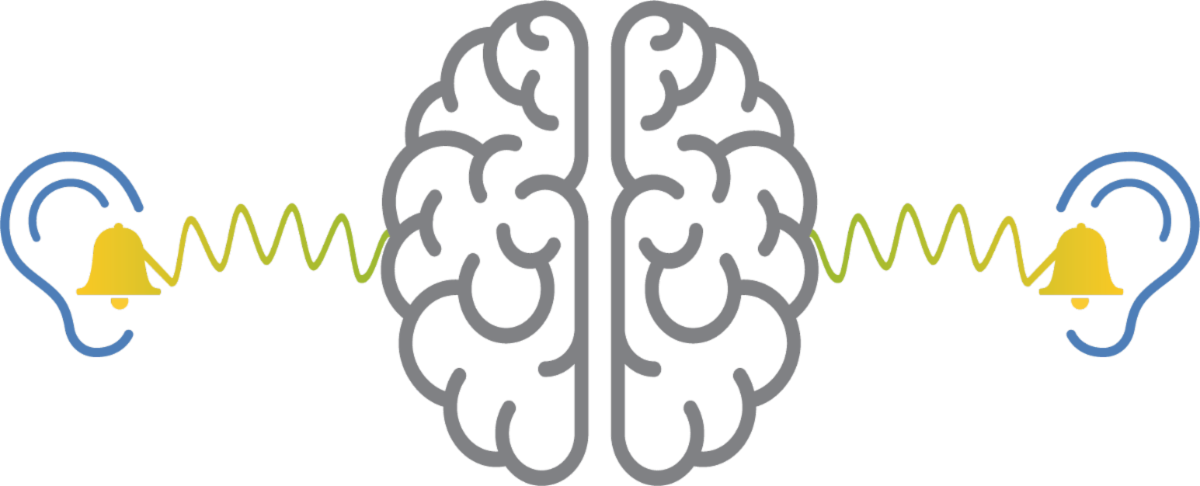
The Personal and Financial Effects of Tinnitus
Research has found that people with severe tinnitus complaints may experience significantly higher healthcare costs than people with mild or moderate symptoms. Productivity losses may also be greater for those with moderate or severe tinnitus.
Researchers have reported that tinnitus severity can be an important predictor of healthcare expenses. When patients are referred to several different caregivers without a coordinated treatment plan, care can become fragmented, frustrating and costly.
Although the economic costs are significant, our primary concern is the effect tinnitus can have on the person experiencing it. The symptoms can be distressing, but learning about the condition and understanding the available treatment pathways can make a meaningful difference.
There Is No Magic Pill for Tinnitus
Misleading medical claims and deceptive advertisements sometimes promise a quick cure for tinnitus. The truth is that there is no magic pill that has been proven to eliminate the condition.
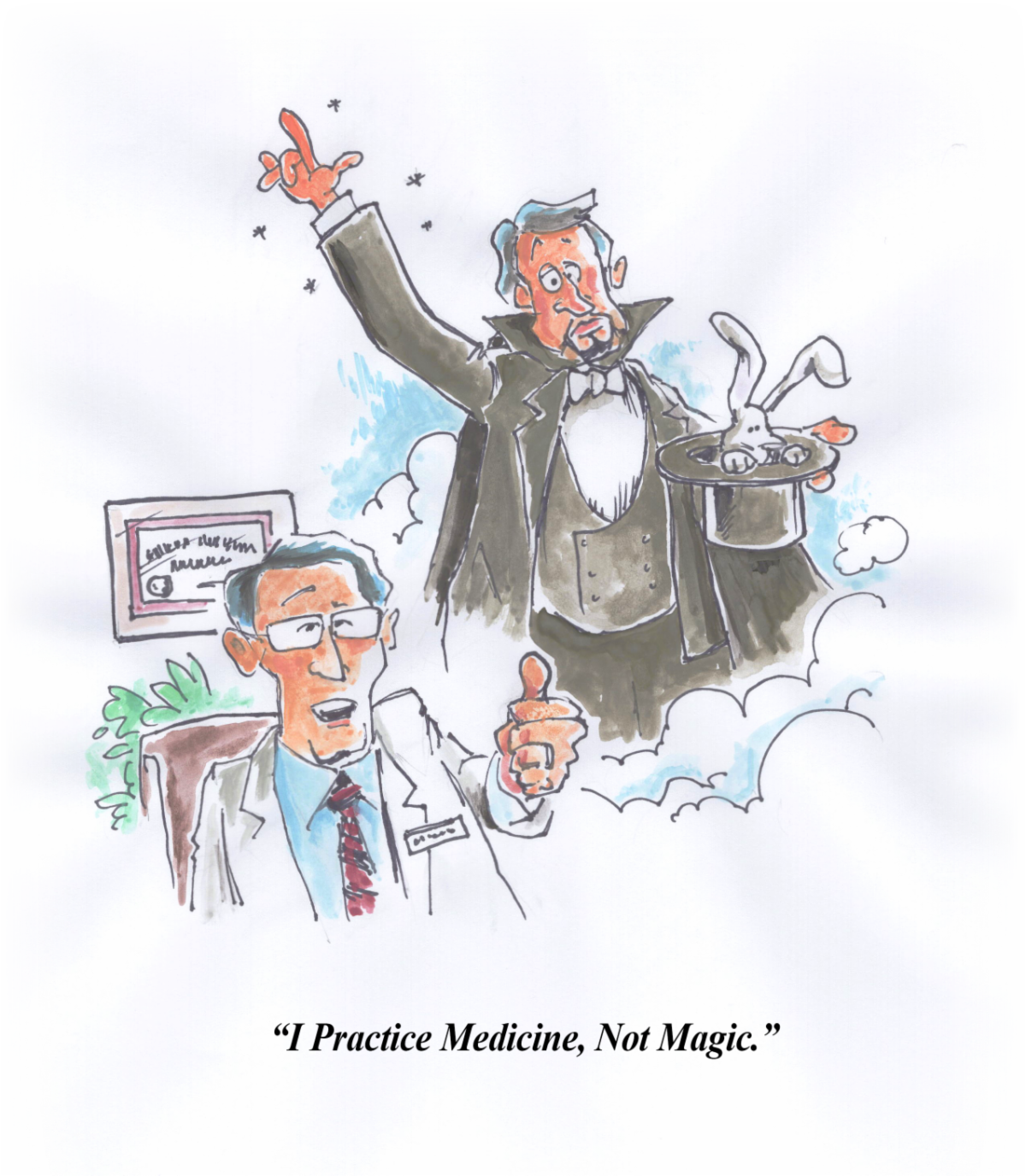
Although there are no medications approved by the United States Food and Drug Administration specifically to eliminate tinnitus, carefully selected therapeutic options may reduce how bothersome the symptoms feel.
Sound professional advice matters. Because tinnitus and hearing function are closely connected, a thorough evaluation should assess both the tinnitus symptoms and the person’s type and degree of hearing loss.
Are You or a Loved One Experiencing Tinnitus?
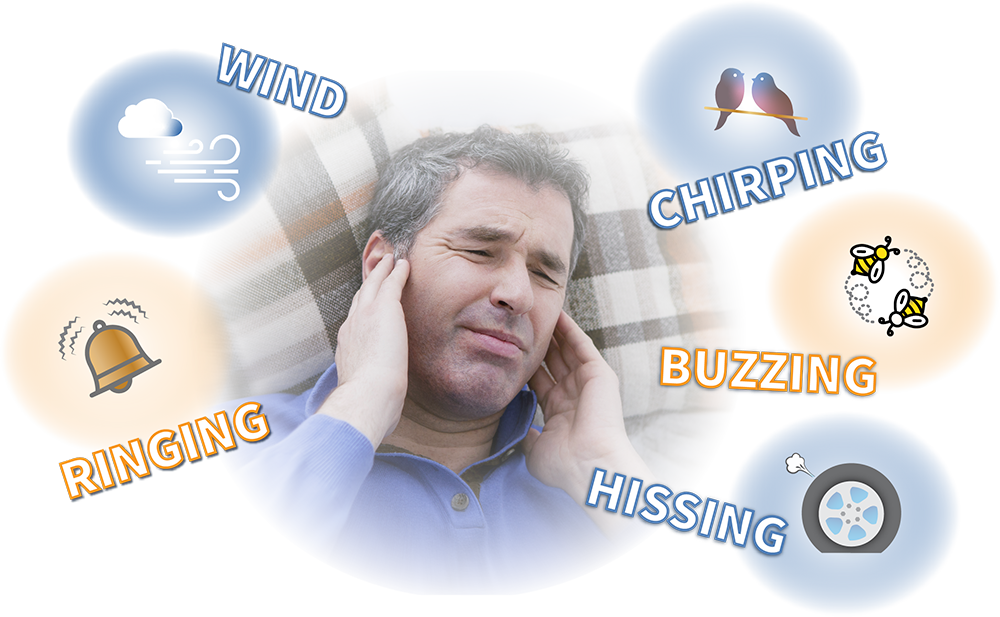
People with tinnitus may describe hearing sounds that do not have an identifiable external source. These sounds may include ringing, buzzing, humming, clicking, hissing or roaring.
The sound may be present in one ear, both ears or somewhere inside the head. It may be constant or intermittent, and its intensity can vary.
Steps You Can Take
People who have already tried quick fixes may feel frustrated or unsure about where to turn. However, personalized treatment plans and consistent healthy habits can lead to meaningful improvements in quality of life.
If tinnitus is troubling you, it is important to:
- Stay calm and remember that help is available.
- Speak with your primary care provider and an audiologist.
- Learn about reputable tinnitus treatment options.
- Do not accept the idea that you simply have to live with bothersome symptoms without seeking professional guidance.
How Hearing Aids May Help With Tinnitus
Many people who experience tinnitus also have hearing loss. In addition to improving communication, hearing aids may reduce tinnitus awareness by making outside sounds easier to hear.
When the brain receives more sound from the surrounding environment, its attention may be drawn away from the internal head noise. This blending of external and internal sounds can make tinnitus less noticeable for some people.

Good Humor, Healthy Hearing
While we take your hearing care seriously, a little laughter goes a long way.
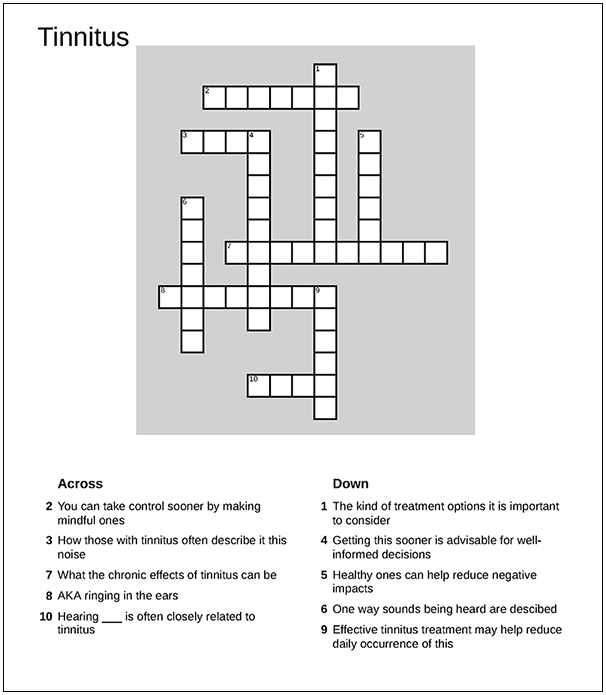
Test your tinnitus knowledge with this educational crossword puzzle.
Play the Tinnitus Crossword Online Download and Print the Crossword
Do Not Suffer in Silence
Talk with us and share your concerns. We promise to listen closely and, when appropriate, coordinate with your other healthcare providers.
Our goal is to recommend sound solutions and provide continuing care that may lessen the effect tinnitus has on daily life. You deserve to understand the available therapeutic options and practical methods that may reduce symptom severity, stress and financial costs.
Earlier intervention is advisable. Empathetic professional guidance can provide renewed hope that the joys of hearing may replace troublesome tinnitus.
There may not be a magic cure, but better hearing, informed treatment and healthy habits can serve you well.
Are tinnitus symptoms interfering with your daily life?
Schedule a professional hearing and tinnitus evaluation with Focus Hearing.
Contact Focus HearingResearch Sources
- Heller AJ. Classification and epidemiology of tinnitus. Otolaryngologic Clinics of North America. 2003;36(2):239 to 248.
- Erlandsson S. Psychological profiles of tinnitus in patients. In Tyler RS, editor. Tinnitus Handbook. San Diego: Singular Publishing Group; 2000:25 to 58.
- Tyler RS. Neurophysiological models, psychological models and treatments for tinnitus. In Tyler RS, editor. Tinnitus Treatment: Clinical Protocols. New York: Thieme; 2006:1 to 22.
- AMVETS, Disabled American Veterans, Paralyzed Veterans of America and Veterans of Foreign Wars of the United States. The Independent Budget for the Department of Veterans Affairs.
- Henry JA, Dennis KC, Schechter MA. General review of tinnitus: prevalence, mechanisms, effects and management. Journal of Speech, Language and Hearing Research. 2005;48:1204 to 1235.
- Kim KS. Occupational hearing loss in Korea. Journal of Korean Medical Science. 2010;25:S62 to S69.
- Steinmetz LG, Zeigelboim BS, Lacerda AB, Morata TC, Marques JM. Evaluating tinnitus in industrial hearing loss prevention programs. International Tinnitus Journal. 2008;14:152 to 158.
- Noble W, Tyler R. Physiology and phenomenology of tinnitus: implications for treatment. International Journal of Audiology. 2007;46(10):569 to 575.
- Maes IH, Cima RF, Vlaeyen JW, Anteunis LJ, Joore MA. Tinnitus: a cost study. Ear and Hearing. 2013;34(4):508 to 514.
Listen to Focus Hearing Podcasts
Explore conversations about hearing health, patient experiences and practical tips for better hearing.
 Watch this Focus Hearing podcast episode
 Watch another Focus Hearing podcast
 View this Focus Hearing educational episode
Visit the Focus Hearing Podcast Page
Visit Focus Hearing South

Focus Hearing has expanded with an additional location. Patients can expect the same personal attention and exceptional hearing care at both offices.
7500 West 160th Street, Suite 103
Stilwell, Kansas 66085
View the South Office on Google Maps

What Our Patients Say
“I am excited to have my new hearing aids from Focus Hearing. Shannon and Dawn are focused on hearing, and they are also focused on customer service. They set the bar very high on quality hearing and high customer service. They delivered far superior service than my previous hearing aid company. Thank you, Shannon!”
Len R.
Visit Focus Hearing
Focus Hearing Quivira
10990 Quivira Road, Suite 120
Overland Park, Kansas 66210
Walk in service hours
Monday through Friday
10:00 a.m. to 3:00 p.m.
Focus Hearing South
7500 West 160th Street, Suite 103
Stilwell, Kansas 66085
Walk in service hours
Monday through Thursday
10:00 a.m. to 3:00 p.m.
Closed for lunch from 12:30 p.m. to 1:00 p.m.
This information is provided for general educational purposes. Please speak with your physician or hearing care professional about questions concerning your individual health.