

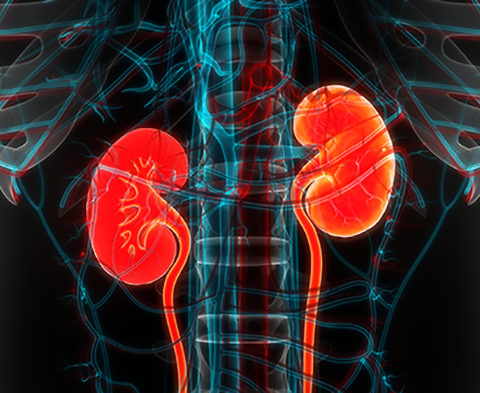
Located below the rib cage, on each side of your spine, kidneys are two bean-shaped organs about the size of a fist.

Chronic Kidney Disease and Hearing Loss
Highways, education, finance, electrical power and healthcare are all examples of systems. The human body also contains complex systems made up of organs and tissues that work together.
Major body systems include the nervous, muscular, respiratory, circulatory and digestive systems. Understanding how these systems interact can help people make informed healthcare decisions.
What Do the Kidneys Do?
The kidneys are two bean shaped organs located below the rib cage, one on each side of the spine. Each is approximately the size of a fist.
The kidneys remove waste, extra fluid and acids from the body. They also help maintain a healthy balance of water, salts and minerals in the blood.
Without this continuous filtering process, nerves, muscles and other tissues may not function normally.
What Is Chronic Kidney Disease?
Chronic kidney disease, commonly abbreviated CKD, is a long term condition in which the kidneys become damaged or cannot filter blood as effectively as they should.
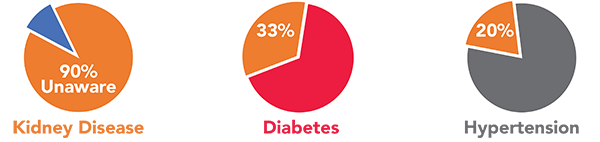
Approximately one in seven American adults has chronic kidney disease.
That represents about 37 million people, and many are unaware that they have the condition.
Early kidney disease often causes few noticeable symptoms. Public health estimates indicate:
- Many people with CKD do not know they have it.
- Approximately one in three adults with diabetes may develop kidney disease.
- Approximately one in five adults with high blood pressure may develop kidney disease.
Know Your Kidney Numbers
Many people monitor weight, blood pressure and cholesterol but are less familiar with kidney function measurements.
Two commonly used tests provide important information about kidney health.
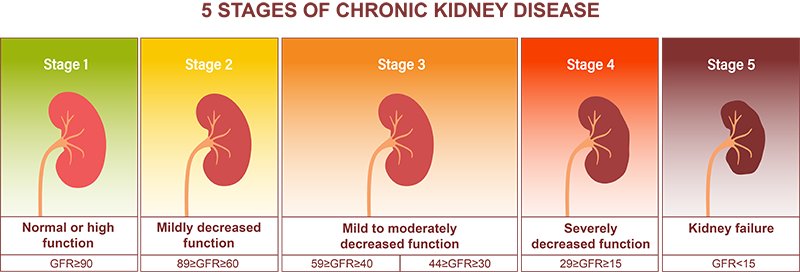
Estimated Glomerular Filtration Rate
The estimated glomerular filtration rate, commonly called eGFR, is a blood test calculation used to estimate how effectively the kidneys filter waste from the blood.
Urine Albumin to Creatinine Ratio
The urine albumin to creatinine ratio, commonly called uACR, checks whether albumin is present in the urine. Albumin is a protein that is normally found in the blood.
Depending on the results and medical history, a physician may also recommend ultrasound imaging, other laboratory tests or a kidney biopsy.
Watch this short educational video to learn why kidney testing matters.
Watch the Kidney Testing Video
View the Kidney Disease Information at Full Size
Possible Symptoms of Advanced Kidney Disease
Many people do not experience severe symptoms until kidney disease has progressed. Possible symptoms may include:
- Reduced energy.
- Difficulty concentrating.
- Poor appetite.
- Difficulty sleeping.
- Muscle cramping at night.
- Swollen feet or ankles.
- A need to urinate more frequently, especially at night.
These symptoms can have many possible causes. A physician should evaluate any medical concerns and determine which tests are appropriate.
How Can Kidney Disease Relate to Hearing?
Healthy kidney function is essential to the body’s filtration and circulatory systems. Many people are surprised to learn that kidney function may also relate to the delicate structures inside the cochlea.
Chronic kidney disease can increase the risk of cardiovascular and blood vessel problems. When the kidneys do not effectively remove waste and toxins from the bloodstream, several body systems may be affected.
Research has reported a high prevalence of sensorineural hearing loss among people with chronic kidney disease.
One study found that the odds of hearing impairment increased as estimated kidney function declined.
The researchers concluded that chronic kidney disease combined with high blood pressure may be an important factor affecting hearing thresholds.
They recommended hearing screening for patients with CKD so hearing impairment can be identified and addressed earlier.

A Circulatory Circle of Concern
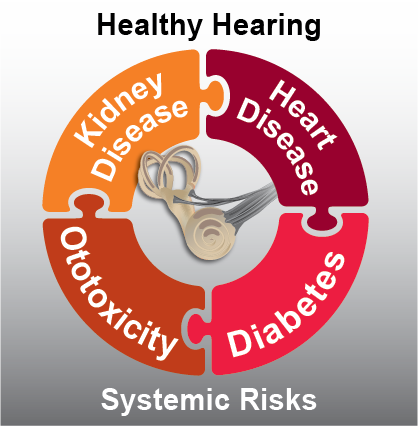
Kidney disease, cardiovascular disease, diabetes and ototoxic medications may each affect the quality, quantity or purity of the blood supply needed for healthy body function.
The heart, kidneys and inner ear all depend on circulation. Problems involving blood vessels, blood pressure, blood sugar or waste filtration may affect more than one body system.
Consider a Hearing Evaluation If You:
- Have chronic kidney disease.
- Have diabetes or high blood pressure.
- Receive dialysis or other ongoing kidney treatment.
- Take medications that may affect hearing or balance.
- Notice ringing, buzzing or other sounds in your ears.
- Have difficulty understanding speech.
- Have not received a baseline hearing test.
Good Humor, Healthy Hearing
While we take your hearing care seriously, a little laughter goes a long way.

Communication Matters During Kidney Care
Living with chronic kidney disease or caring for someone who has it can involve frequent appointments, medical instructions and treatment decisions. Clear communication is essential.
Untreated hearing loss can make it harder to understand healthcare professionals and communicate with family members. It may also contribute to frustration or social isolation.
If you have chronic kidney disease or know someone who should be tested, speak with the appropriate medical professionals. Periodic hearing evaluations can also identify the type and degree of hearing loss.
When appropriate, Focus Hearing can coordinate with nephrologists, primary care physicians and other healthcare professionals to support communication and quality of life.
Do you have chronic kidney disease or concerns about changes in your hearing?
Schedule a professional hearing evaluation with Focus Hearing.
Contact Focus HearingResearch sources:
National Institute of Diabetes and Digestive and Kidney Diseases. Kidney Disease Statistics for the United States.
Gupta S, Curhan SG, Cruickshanks KJ and colleagues. Chronic kidney disease and the risk of incident hearing loss. The Laryngoscope. 2020;130(4):E213 to E219.
Seo YJ, Ko SB, Ha TH and colleagues. Association of hearing impairment with chronic kidney disease. BMC Nephrology. 2015;16:154.
This information is provided for general educational purposes. Hearing evaluation does not diagnose kidney disease. Please speak with a physician or nephrologist about kidney symptoms, laboratory results and treatment.
Visit Focus Hearing South

Focus Hearing has expanded with an additional location. Patients can expect the same personal attention and exceptional hearing care at both offices.
7500 West 160th Street, Suite 103
Stilwell, Kansas 66085
View the South Office on Google Maps

What Our Patients Say
“Annie is the best receptionist I have ever encountered anywhere. Michael and Shannon are both efficient and took care of me and my hearing aid needs. I could not rate anyone in an office any higher.”
Lauren W.
Visit Focus Hearing
Focus Hearing Quivira
10990 Quivira Road, Suite 120
Overland Park, Kansas 66210
Walk in service hours
Monday through Friday
10:00 a.m. to 3:00 p.m.
Focus Hearing South
7500 West 160th Street, Suite 103
Stilwell, Kansas 66085
Walk in service hours
Monday through Thursday
10:00 a.m. to 3:00 p.m.
Closed for lunch from 12:30 p.m. to 1:00 p.m.